
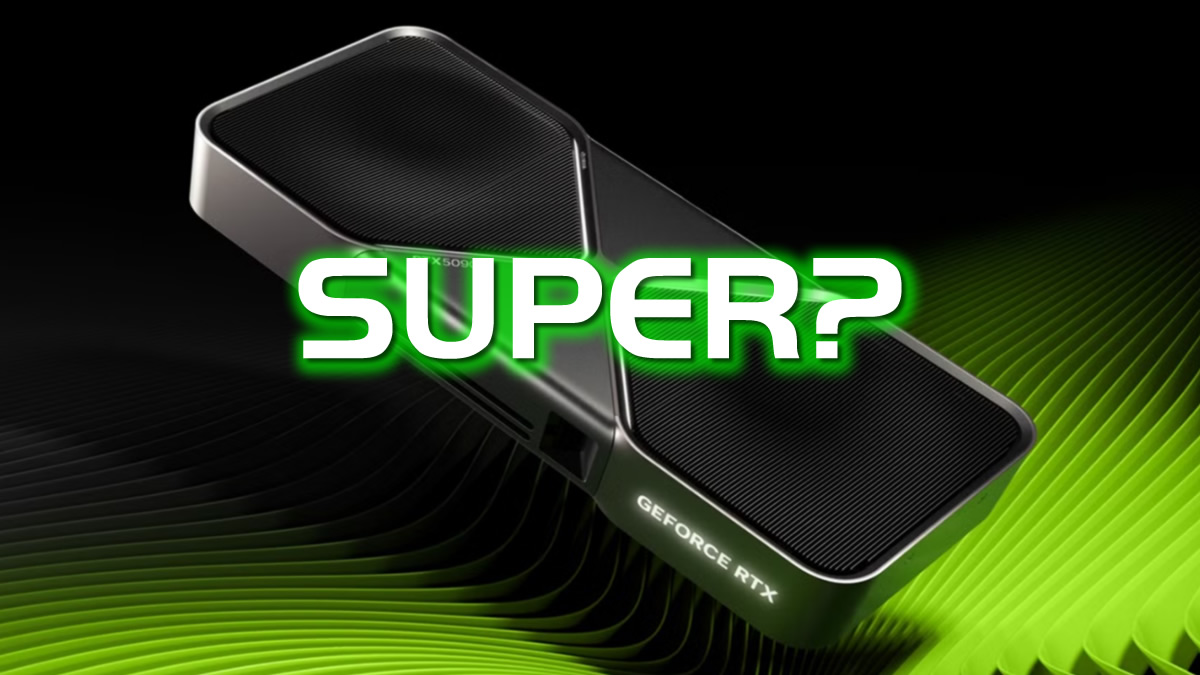
Nvidia could axe its planned RTX 50 SUPER series due to rising DRAM costs
As we previously reported, the DRAM market is now facing major shortages. Based on a new report from Uniko’s Hardware, this increase in DRAM costs may prompt Nvidia to reconsider its plans for the RTX 50 SUPER series GPU lineup. The RTX 50 SUPER series could be cancelled.
3GB GDDR7 memory modules are in short supply and may not become available in sufficient quantities to enable Nvidia to produce its planned RTX 50 SUPER series GPUs. These 3GB GDDR7 modules are the cornerstone of Nvidia’s RTX 50 SUPER lineup. By replacing the 2GB modules on existing GPUs with 3GB modules, Nvidia can increase its GPU’s VRAM by 50%. That’s a big upgrade with minimal design effort.
Using 3GB GDDR7 modules would give Nvidia’s RTX 5070 SUPER 18GB of memory. Nvidia’s RTX 5070 Ti SUPER and RTX 5080 SUPER would feature 24GB of VRAM. This memory would be hugely useful for gamers and productivity-focused users.
GDDR7 is likely a low priority for DRAM manufacturers
With DRAM pricing rising at a rapid rate, DRAM manufacturers are unlikely to dedicate more resources to producing additional 3GB GDDR7 memory modules for Nvidia. If other DRAM products are more profitable, they will focus on that instead whenever possible. Furthermore, a shortage of GDDR7 modules would also inflate the cost of those modules. In other words, it isn’t in the best interest of DRAM manufacturers to produce more 3GB GDDR7 modules for Nvidia.
If Nvidia has access to a limited amount of 3GB GDDR7 modules, it makes sense for them to utilise them in their most profitable products. That includes their RTX 5090 laptop GPU and their RTX PRO 6000 series GPUs.
There are major shortages of DRAM, and these shortages can be attributed to the excessive spending on AI data centres. While the death of Windows 10 is forcing many consumers to upgrade their PCs, their DRAM needs are insignificant compared to the demands of AI data centres.
Nvidia may be forced to completely change its RTX 50 SUPER product line, or cancel it entirely. If memory costs are too high, memory upgrades may be out of the question.